
Delivering Passive House projects without the cost shock

We’re seeing more clients aspire to Passive House. The ambition is ultra-low energy use, exceptional comfort and buildings that perform for the long term. But often, we’re brought in once designs are already developed, budgets are fixed and at that point, the cost of achieving the standard comes as a real shock.
A scheme is often well progressed, a specialist consultant is appointed and suddenly the project is no longer viable as designed.
The challenge
Passive House isn’t a product or a bolt-on. It relies on the whole design team working together from the very start:
Form factor and orientation: Shaping the building around performance from day one
Fabric-first construction: Insulation and airtightness designed into every detail
Thermal bridge-free detailing: No cold spots, no shortcuts at junctions
Integrated building services: MVHR and services considered alongside the fabric
When these principles aren’t part of the thinking early on, trying to introduce them later often leads to increased costs, design compromises, programme delays, or the ambition is dropped altogether.
Common misconceptions around Passive House
There’s a perception that Passive House automatically means higher consultancy and build costs.
The reality is more nuanced.
The myth: Passive House requires specialist consultants at premium rates, layered on top of the existing team.
The reality: When managed properly, Passive House input is integrated into the design process, not added as an extra layer.
Certification costs are typically a small fraction of the overall build cost and in many cases, clients don’t need certification, they need the performance.
As UK Building Regulations continue to tighten, the gap between a compliant building and a high-performance building is narrowing. Many of these principles are simply becoming good practice.
Our approach
Our role is to bridge the gap between ambition and deliverability.
Align brief, budget and performance from the outset so the design develops within realistic parameters
Keep performance ambitions grounded as the design evolves, testing decisions in real time, not after the fact
Focus investment where it adds value, challenging cost where it doesn’t contribute to performance
Guide on certification vs. performance-led approaches, helping clients make informed decisions about what they actually need
Ensure buildability on site. Designs that work in practice.
This reduces redesign, avoids abortive work and keeps the programme on track.
Lessons from experience
We’ve recently supported projects where sustainability ambitions were central but budgets remained very real constraints.
Growing Local, Community Farm & Education Centre
A community-focused project combining sustainable construction with education and food production, where balancing performance and cost was critical from day one.
A highly considered “forever home” designed to Passive House principles.
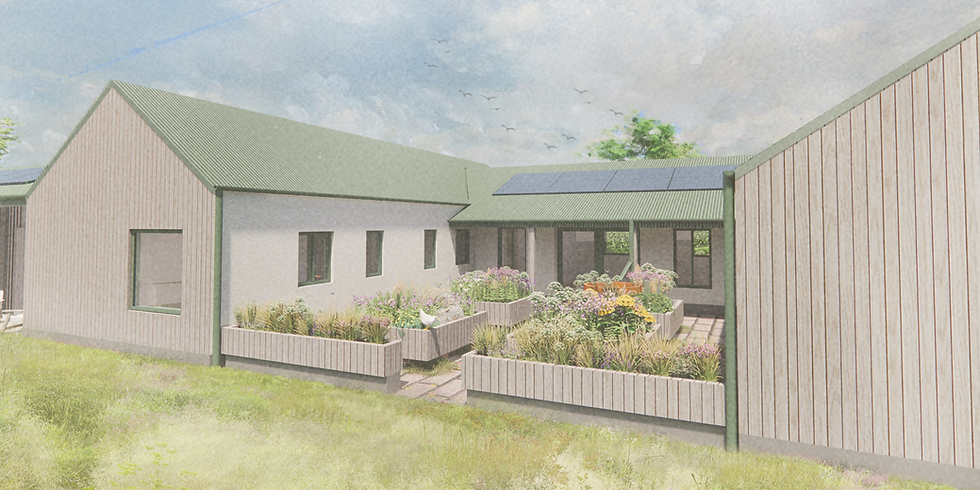
By bringing construction knowledge, cost awareness and delivery experience into the design process early, we help ensure that ambition, budget and buildability stay aligned throughout.
Considering a Passive House project?
Passive House is a robust, proven approach but it doesn’t need to be costly or complex.
With the right input at the right time, projects stay grounded, budgets stay realistic and design ambition stays intact.
If you’re considering a scheme, it’s worth having the conversation early. It can save a significant amount of time, cost and compromise later on.
If you would like to find out more about our approach, please get in touch.


Comments